Why Flexible Packaging?
Flexible packaging is not just a format choice — it is a strategic decision that reduces costs, shrinks your environmental footprint, and positions your brand for the future.
The Case for Making the Switch
Rigid packaging — glass jars, metal cans, plastic bottles, and trays — has served the food and beverage industry for generations. But the economics, the logistics, and the environmental expectations of today's market have shifted decisively in favour of flexible formats.
Flexible packaging (pouches, spouted pouches, flow-wrappers, roll stock, and Bag-in-Box solutions) delivers measurable advantages across the supply chain, from the filling line to the retailer's shelf to the consumer's home.
Key Advantages of Flexible Packaging
Dramatically Lower Shipping and Warehousing Costs
Flexible packaging ships and stores flat before filling, and its light weight means far more units per pallet after filling. Brands routinely see 30–70% reductions in freight and warehousing costs compared with glass or metal equivalents.
Reduced Labour and Breakage
Flexible formats are lighter and more durable in transit. Breakage rates drop sharply, and filling-line labour requirements typically fall alongside them — a direct saving that compounds across every production run.
Stronger Shelf Presence
Stand-up pouches and spouted formats command premium shelf real estate, offer 360° printable surface area, and communicate brand values more effectively than rigid containers. Consumers consistently rate them as more convenient and easier to use.
Extended Shelf Life
Modern flexible laminates provide excellent oxygen and moisture barriers. Many formats support retort, hot-fill, and aseptic processing, enabling shelf-stable products without refrigeration and reducing food waste throughout the supply chain.
A Smaller Environmental Footprint
Flexible packaging uses significantly less material by weight than rigid alternatives. It requires less energy to manufacture, generates less greenhouse gas in transit, and produces less landfill waste per unit sold — advantages that are increasingly important to retailers, regulators, and consumers alike.
Environmental Impact: Flexible vs Rigid
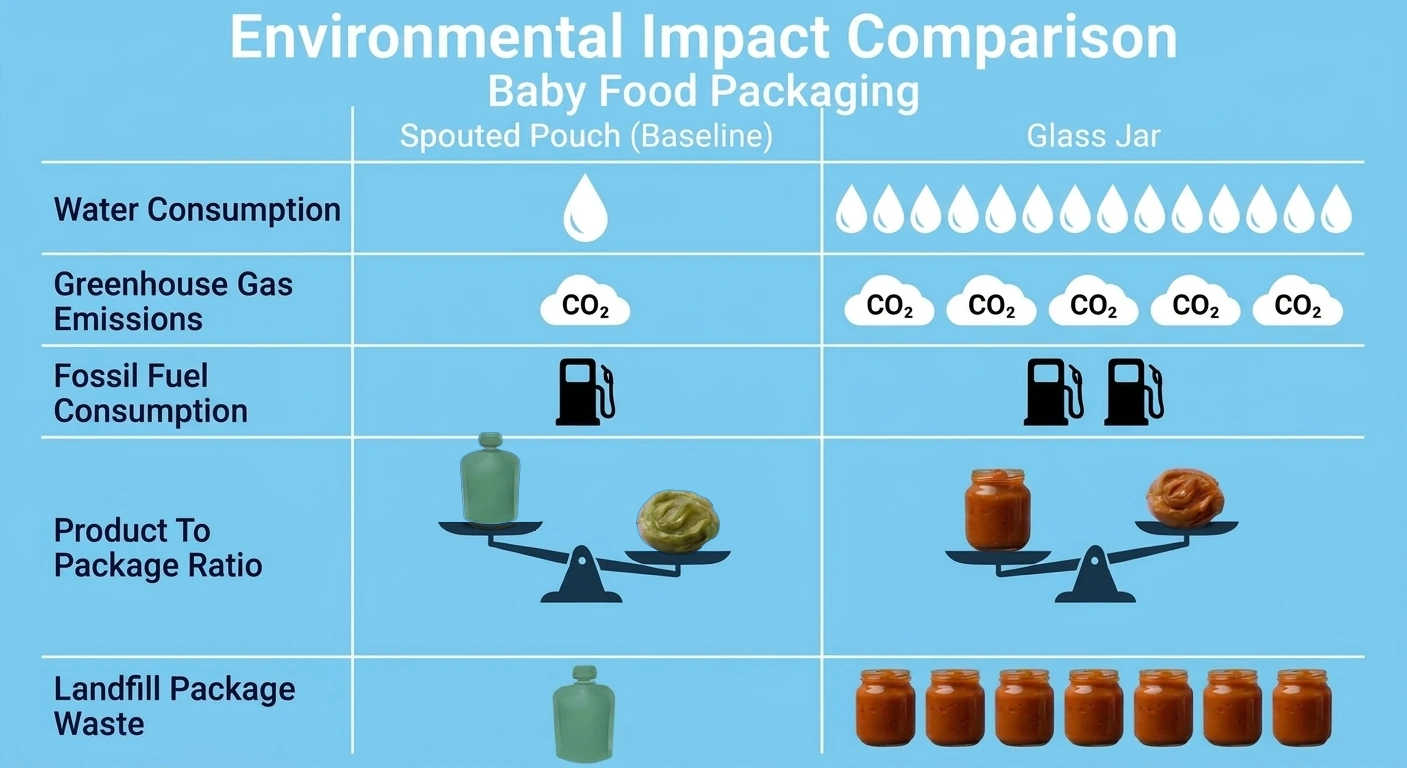
The comparison below illustrates the environmental difference between a spouted pouch and a glass jar for the same baby food application — across water consumption, greenhouse gas emissions, fossil fuel use, product-to-package ratio, and landfill waste.
Flexible Formats We Work With
FlexPak Growth Partners has deep expertise across the full range of flexible formats. We help you identify the right structure for your product, your filling line, and your retail channel.
Stand-up pouches
Lay-flat and stand-up formats for dry, wet, and refrigerated products.
Spouted pouches
Resealable, consumer-friendly formats for purees, sauces, beverages, and more.
Flow-wrappers and pillow bags
High-speed formats for snacks, confectionery, and dry goods.
Roll stock and form-fill-seal
Flexible laminates for vertical and horizontal FFS lines.
Bag-in-Box
Bulk and retail formats for wine, juice, sauces, and liquid ingredients.
Box liners and bulk bags
Industrial and foodservice formats for high-volume liquid and semi-liquid products.
Ready to Explore the Business Case?
FlexPak Growth Partners can help you build a rigorous, data-backed case for converting your current rigid packaging to a flexible format — including cost modelling, supply chain impact, and a realistic implementation roadmap.